

MMS Manufacturing
Not Just Brackets. Engineered Solar Infrastructure.
India's solar mounting structure market is flooded with commodity hardware — catalog brackets fabricated without structural analysis, sold by the kilogram, installed with no thought for the specific wind zones, roof types, and load profiles of each project.
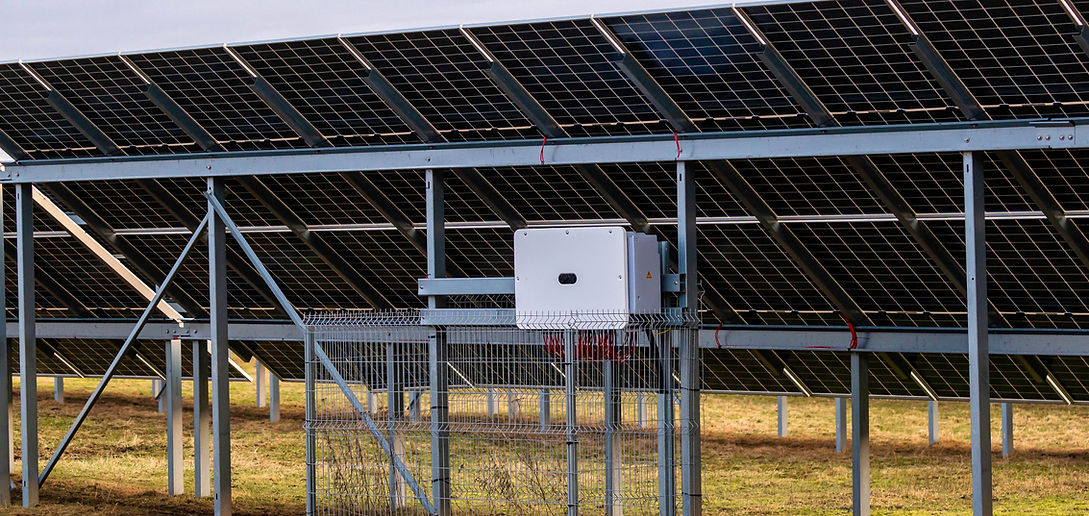
Konaark builds differently. Every mounting structure we manufacture is backed by structural simulation data, designed for the actual site conditions, and certified to Indian engineering standards. We call this approach Data-Engineered MMS — and it's the only way we know how to build.
.jpg)
The Data-Engineered Approach
Most MMS suppliers have a catalog. You pick a product, they ship it. What you receive may or may not be appropriate for your roof type, module weight, wind zone, or installation angle. Konaark's process is different:
Step 1
Site Data Collection
We collect roof type, dimensions, orientation, and pitch. Module specifications. Location wind zone per IS 875 classification. Structural integrity of the host building.
Step 2
Structural Analysis
Our engineers run structural simulations using collected site data. Load cases include dead load (module + MMS weight), wind load (upward and lateral), and seismic loads for applicable zones.
Step 3
Custom Design
The MMS design is optimized for the specific site — not pulled from a catalog. Member sizes, connection details, anchor specifications, and spacing are calculated, not estimated.
Step 4
Manufacturing
Production in our Hindupur/Hyderabad facility using certified raw materials — IS 2062 structural steel for HDGI structures, 6000-series aluminum for anodized profiles.
Step 5
Delivery with Documentation
Every project ships with a Structural Calculation Report, material test certificates, and compliance documentation for IS 2062, IS 4759, and IS 875. You receive engineering proof, not just hardware.
Hot-Dip Galvanized Iron (HDGI) — For Industrial and Heavy-Duty Applications
Base material: IS 2062 Grade E250 structural steel. Galvanized to IS 4759 — hot-dip galvanized after fabrication, not pre-galvanized.
Zinc coating thickness: 85 microns minimum, exceeding IS 4759 requirements. Post-galvanize chromate passivation for enhanced corrosion resistance in coastal zones.
Lifespan: 25+ years inland, 20+ years in coastal/high-humidity environments.
Best for: large commercial rooftops, industrial installations, ground-mount systems, high wind-load sites.
